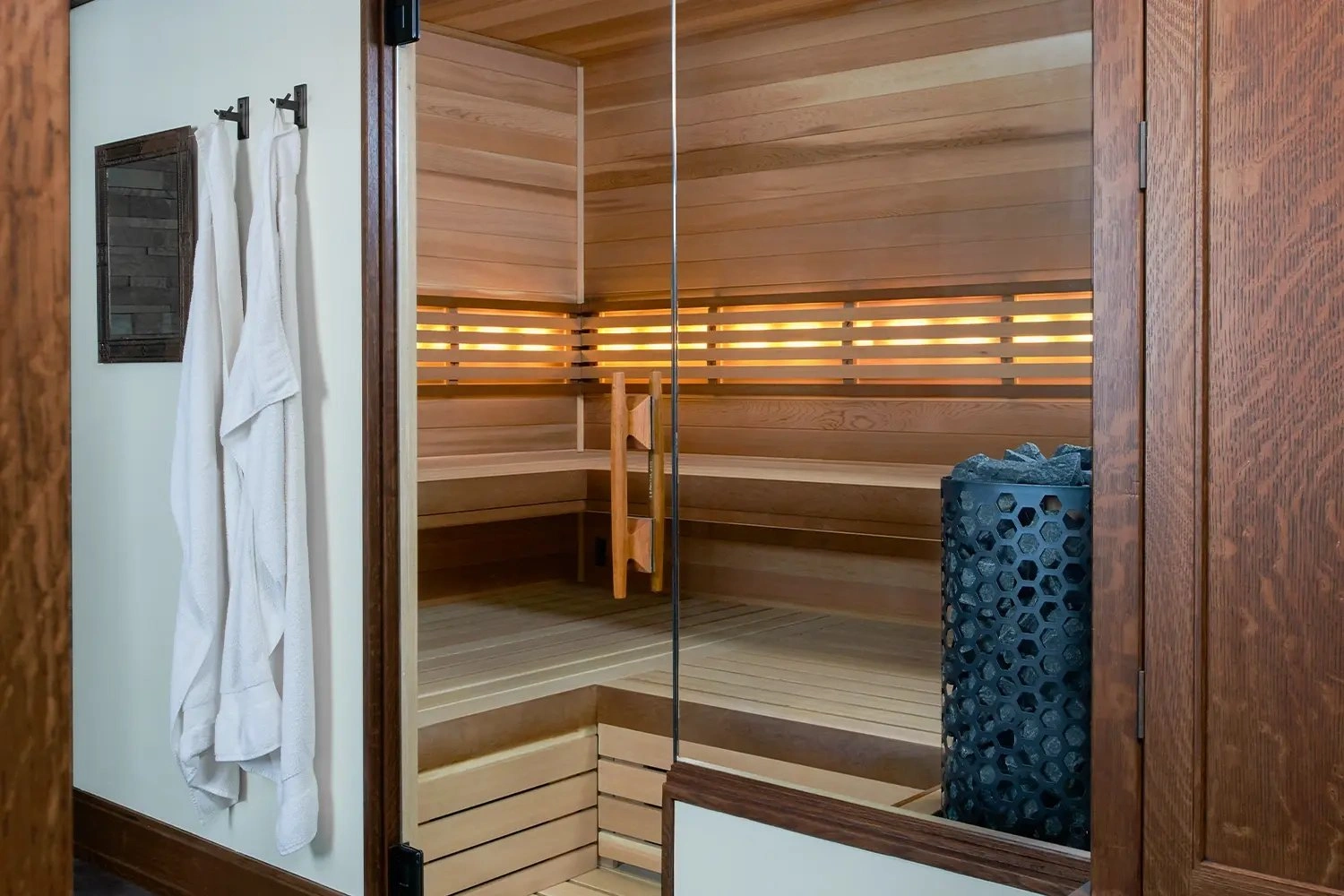
A sauna in Denver gets a chance to dry out between uses. In Houston? That’s a different story.
Between the Gulf Coast humidity, warm temperatures, and moisture that lingers long after a session, your sauna faces conditions that can quietly shorten its lifespan.
According to NOAA’s Houston climate data, the area’s average relative humidity is approximately 72%, climbing to nearly 90% around dawn. That’s a lot of moisture for a room built primarily from wood.
And while a well-built sauna can last for decades, neglecting a few simple maintenance habits can lead to stubborn odors, discolored benches, mold, and expensive heater repairs.
Fortunately, proper custom sauna maintenance doesn’t require hours of scrubbing. It comes down to knowing how to clean your sauna safely, what products to avoid, and when to call a professional.
Sauna wood naturally absorbs and releases moisture. But Houston’s humid air can slow drying, allowing dampness to linger beneath benches, around floorboards, and behind poorly ventilated paneling.
The EPA recommends keeping indoor relative humidity below 60%, ideally between 30% and 50%, to help prevent mold growth.
For Houston sauna owners, proper ventilation is essential. Keep the surrounding room conditioned, ensure intake and exhaust vents remain unobstructed, and never leave a damp sauna sealed shut after use.
Outdoor installations deserve extra attention. Traditional outdoor saunas face additional exposure to rainfall, humidity, and temperature fluctuations, making proper drainage and weather protection especially important.
The exterior wood also needs protection. According to Sauna360’s recommendations, untreated exterior wood should receive a suitable weather-resistant finish after installation, with penetrating oil finishes generally preferred. Reapply the treatment when the wood starts looking dry or dull.
Keep in mind that these treatments are strictly for exterior wood. Never apply exterior coatings to the inside of your sauna, where heat can cause chemical residues to become airborne.
The safest way to clean sauna wood is usually the simplest: plain water, a soft brush, and a clean towel.
For traditional saunas, a quick 30–60-second scrub with plain water after each session helps prevent sweat and dirt buildup. For stubborn stains, try a damp cloth or lightly sand untreated wooden benches with fine 220-grit sandpaper.
Avoid chemical cleaners unless your manufacturer specifically approves them. Residues left on wood can become airborne when heated.
Infrared saunas require extra care around heating panels and fabric-covered surfaces. Always follow the manufacturer’s cleaning instructions.
Some sauna benches can benefit from a light application of pure, manufacturer-approved paraffin oil. It helps reduce moisture and sweat absorption while preserving the wood’s natural appearance.
However, not every custom sauna model surface should be treated. Always check your model’s instructions before applying oil, and follow the recommended application and reapplication schedule.
Some household cleaners that work beautifully in bathrooms can cause serious problems inside a heated sauna.
Avoid:
Heat can cause chemicals and fragrances left on sauna surfaces to become airborne, potentially affecting the air you breathe.
Never paint, stain, or varnish interior sauna wood. These finishes can interfere with the wood’s natural response to heat and moisture and may release fumes when heated. Use only manufacturer-approved treatments where specifically permitted.
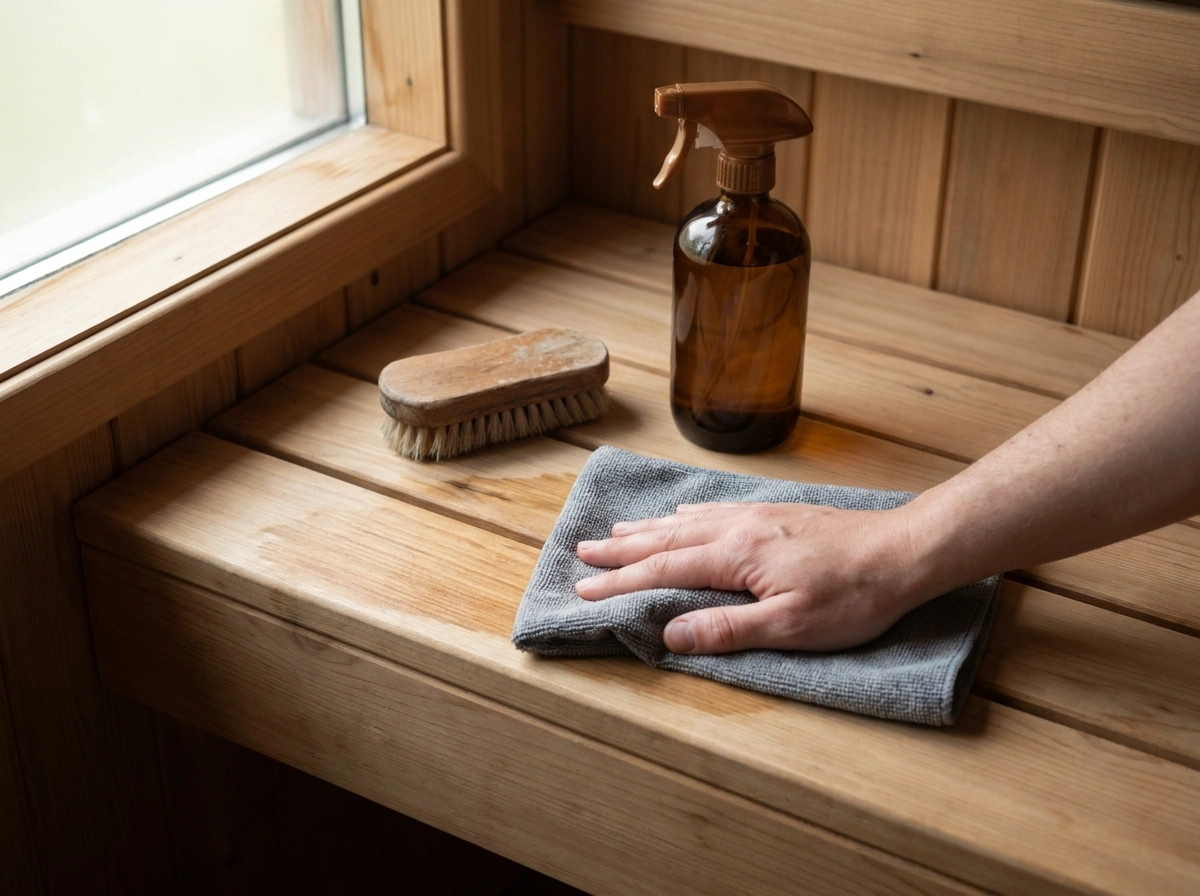
The most effective sauna maintenance routine takes just a few minutes.
Once you’ve finished your session:
For Houston homeowners, leaving the door open is particularly valuable, provided the surrounding space is air-conditioned and adequately dehumidified.
The EPA recommends drying wet materials within 24–48 hours to reduce mold risk. Your sauna should dry much sooner than that after normal use.
Even with good daily habits, moisture and dirt can accumulate in places you rarely see. A consistent schedule helps catch small problems before they become expensive repairs.
Once a month, give your sauna a more thorough inspection.
Pay particular attention to areas where wood meets wood. These joints can retain moisture longer than exposed surfaces.
Every few months, inspect components that experience repeated heating and cooling. Check door hinges, gaskets, bench fasteners, and visible wood surfaces.
For traditional saunas, inspect heater stones according to the manufacturer’s instructions. Crumbling or tightly packed stones can restrict airflow and affect heater performance.

If you regularly pour water over your sauna stones, keep an eye out for mineral deposits, too. Depending on your water supply, mineral buildup can accumulate on stones and surrounding surfaces over time. Follow the heater manufacturer’s instructions for inspecting and replacing stones.
For infrared saunas, use a clean, dry towel to absorb sweat from emitter backrests and fabric-covered surfaces. A vacuum with a brush attachment can help remove dust and lint from black fabric coverings. If stains develop, gently clean with a damp towel and allow the surface to dry completely. Avoid detergents that could discolor the fabric or leave residues behind.
Avoid dismantling heaters or electrical controls yourself.
Some sauna problems need more than another round of cleaning. Stop using your sauna and arrange professional assessment if you notice:
Electrical faults are particularly serious. Heater wiring, circuit testing, and electrical repairs should be handled by appropriately licensed professionals. Never repeatedly reset a tripping breaker just to finish a session.
It’s best to avoid vinegar unless your sauna manufacturer specifically recommends it. Even common household cleaning products can affect wood surfaces or leave residues behind. For routine cleaning, plain water and a clean towel or soft brush are usually sufficient.
Interior sauna walls and benches should generally remain untreated. Ordinary paints, stains, and varnishes can interfere with the wood’s natural properties and release fumes when heated. Some manufacturers allow specific treatments for benches, handles, or floorboards, so always check your model’s care instructions. Exterior sauna wood is different and typically requires weather-resistant protection.
Persistent odors often indicate trapped moisture, sweat buildup beneath benches, inadequate ventilation, or contamination in hidden areas. If the smell returns after proper cleaning and drying, professional inspection may be necessary.
Yes. Gradual, even darkening can result from heat, oxidation, and normal use. However, irregular dark patches, fuzzy growth, softness, or musty odors may indicate moisture damage or mold rather than ordinary aging.
With over 35 years of experience, Spas Unlimited understands what it takes to protect your investment, especially in Houston’s demanding climate.
Our team knows how moisture affects sauna wood, what causes persistent odors, and which early warning signs could point to more serious heater or structural issues. Addressing these concerns early can help prevent costly repairs and extend your sauna’s lifespan.
Your sauna was built to deliver years of relaxation. Let’s make sure it does.
Contact Spas Unlimited today to discuss your sauna’s maintenance needs and keep your personal retreat in exceptional condition for years to come.